In this article, we will take a deep look at some common kitchen mistakes that beginners often make, while also explaining how to avoid them with real-life examples.
Imagine you pull out a shiny new recipe, gather fresh ingredients, a delicious meal on the table. However, then something goes wrong !! the pasta sticks, the chicken turns out dry, or the cake sinks in the middle. Sound familiar?
Definitely, you’re not alone. Most of us have stood in the kitchen staring with a disappointing result and wondered, “What did I do wrong?” The good news is that almost every kitchen mistake arises to a handful of common kitchen mistake that beginners make. Once you know what they are, you can easily avoid them or rectify them.
In this helpful guide, we’ll walk through the most frequent errors or mistakes, explain why they happen, share real-life examples, and give you simple fixes. By the end, you’ll cook with more ease and far fewer “oops” moments. Let’s dive in.
Why Beginners Make So Many Kitchen Mistakes
New cooks are often multitasking too many things at once: reading a recipe for the first time, learning knife skills, and trying to time everything perfectly. Add in a busy schedule or a tiny kitchen, and small mistakes become big. The truth is, these mistakes aren’t about absence of talent—they’re about deficiency of experience. The more you cook, the more these habits disappear.
That’s why we focus on practical, everyday advice here. No fancy chef techniques—just honest, tested tips that work in real home kitchens.
The Most Common Kitchen Mistakes Every Beginner Should Know
Let’s look at the top mistakes that turn good ingredients into ordinary meals. We’ll cover why they happen and exactly how to fix them.
1. Common kitchen mistake is forgetting to Prep Your Ingredients First
Beginners often chop vegetables while the oil is already heating or hunt for spices while stirring. As a result garlic burnt, uneven cooking, or forgotten ingredients. This a obviously a common kitchen mistakes.
Real-life example: A busy man/woman in his/her first apartment, tried making stir-fry. He/she started cooking the chicken before slicing the peppers. By the time the veggies were ready, the chicken was overcooked and dry.
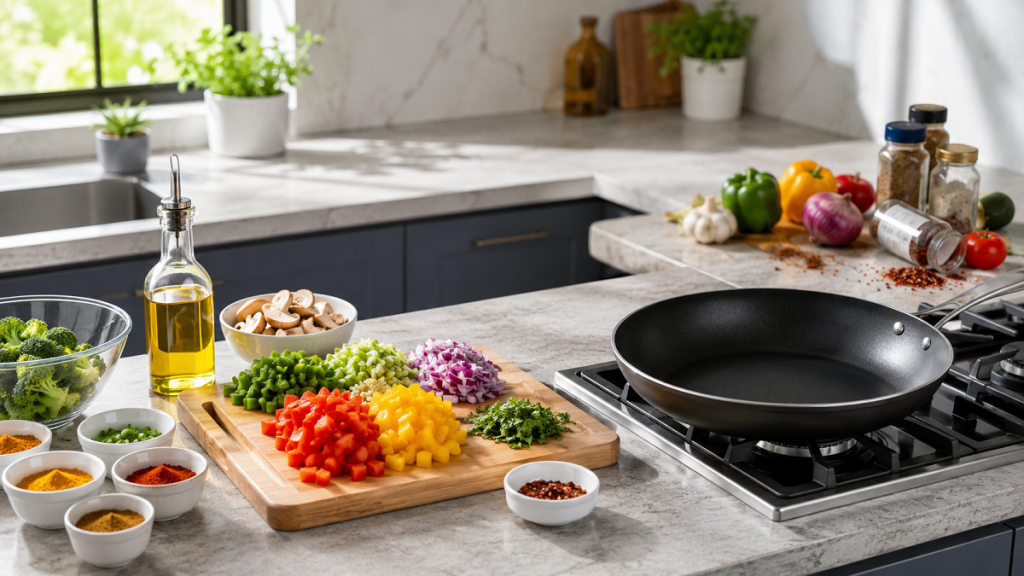
How to fix it: Take 10-12 minutes before you turn on the stove. Measure, chop, and organize everything into small bowls. Your cooking will feel cool & calm instead of chaotic. You’ll also finish faster because you’re not stopping every two minutes.
2. Overcrowding the Pan is a common kitchen mistake.
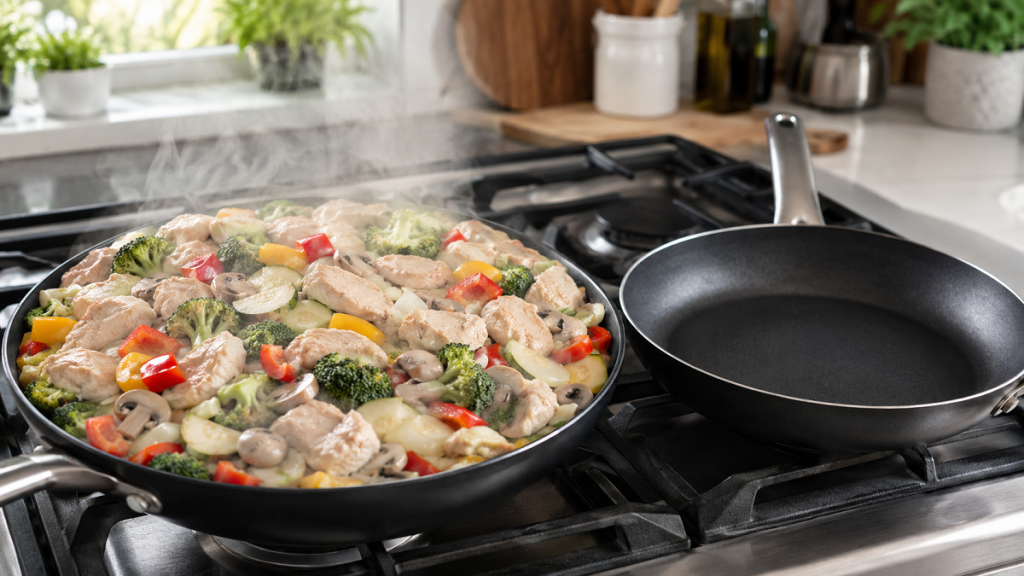
It’s a common habit tempting to dump all the chicken pieces or vegetables into one pan for saving time. However, when food touches too much, it steams instead of browning. Finally, you end up with soggy, pale results instead of crispy, golden perfection.
Real-life example: A new cook once A new cook once found a meal tasted like steamed cabbage, disappointing after 40 minutes in the oven. He roasted an entire tray of Brussels sprouts in one layer so thick that none of them caramelized.
How to fix it: Make practice to cook in batches if possible. Give ingredients room to breathe. Use two pans or roast in stages. The extra five minutes is worth the delicious crust you’ll get.
3. Measuring Ingredients Incorrectly
Another common kitchen mistakes is like that “A pinch” of salt or “about a cup” of flour can mislead and make inconsistent results, such as overly salty dishes or baked goods that spread too much or become flat.
For reliable and balanced flavor in every dish, use precise measurements especially in baking preferably by weight (grams) whenever possible.
Real-life example: Mark followed his grandmother’s cookie recipe using a regular drinking glass instead of a proper measuring cup. The cookies came out rock-hard because he added way too much flour.
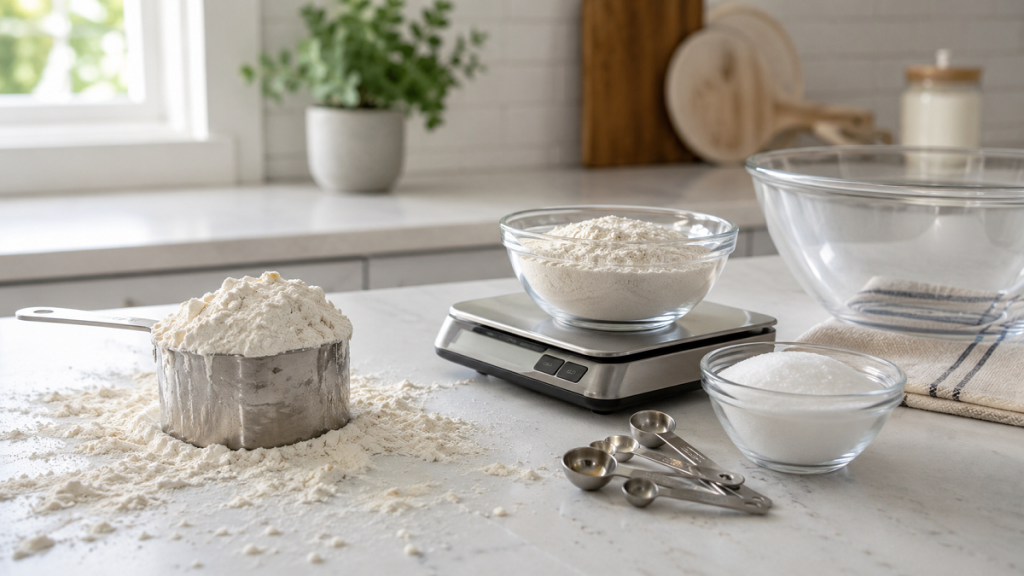
How to fix it: Use dry measuring cups for flour and sugar .Use a kitchen scale —especially for baking for more accuracy. Keep a set of measuring spoons handy and level off spices with a knife.
4. Forgetting to Preheat the Oven or Pan
Your food never gets that beautiful sear or rise if you have these regular practices: slide the cookies into a “hot” oven that’s actually only 250°F instead of 350°F. Or you toss vegetables into a cold skillet.
Real-life example: A beginner baked banana bread in a cold oven to “save time.” The loaf stayed pale, dense, and took twice as long to cook.
How to fix it: Turn the oven and wait for the beep or light to confirm it reached temperature (most ovens take 10–15 minutes). For stovetop cooking, heat the pan for 2–3 minutes before adding oil or food.
5. Seasoning Only at the End
Many beginner cooks wait until the dish is plated to add salt and pepper. However, the flavors can’t penetrate the food. The result is bland bites with occasional salty surprises.
Real-life example: A novice cooks made a common kitchen mistake during his first curry and added all the salt right before serving. Half the pot tasted perfect; but the other half was under-seasoned because the spices never had time to bloom. a
How to fix it: Add a little salt while start sautéing the onions. Taste the dish and adjust the seasoning again halfway through cooking if necessary. Finish with a final pinch of salt if needed after tasting several times. Seasoning in layers this way makes your food taste balanced and restaurant-worthy.
6. Using the Wrong Knife or Dull Blades
Chopping with a butter knife or any dull chef’s knife turns a 5-minute task into a 20-minute struggle. Worse, dull blades slip and cause seriously injury.
How to fix it: Spend quality time in learning basic knife. Keep one good chef’s knife sharp. A quick sharping before each use makes a huge difference.
7. Ignoring Food Safety Basics
Few tiny habits can lead to serious stomach diseases. Like, washing raw chicken under running water, leaving cooked food out too long, or using the same cutting board for raw meat and salad. All of these tiny habits need to ignore.
Real-life example: An undercooked burger can make discomfort a family barbecue. The cook had trusted “it looks done” instead of using a thermometer.
How to fix it: Use a meat thermometer if possible (chicken reaches 165°F / 74°C). Never wash raw poultry because it spreads bacteria. Keep raw meat on a separate board. Wash hands, knives, and boards with hot soapy water between tasks.
Bonus Tips to Build Kitchen Confidence Faster
Taste as you go.
Read the entire recipe before you start.
A tidy counter reduces stress and mistakes.
Try to keep a clean workspace.
Start small. Master scrambled eggs perfectly before attempting a three-course meal.
Conclusion: Turn Mistakes into Mastery
Always remember, learn from each common kitchen mistake and kept going. You can do the same. You can also follow he step:
Start with just one or two tips today.
Prep your ingredients first.
Give your pan space to breathe.
Season in layers.
Small changes create big improvements almost immediately.
Try to feel kitchen like a welcoming space, not a stress zone. With patience and practice, you’ll move from “What went wrong?” to “Wow, I made that!”
You need to preheat properly. Also, use medium heat instead of maximum, and obviously set a timer. Stir or flip more frequently than you think you need to.
Absolutely, running water frequently spreads bacteria around sink and counter. Pat, it dries with paper towels instead and cook to the correct temperature.
Sometimes. Frequent practice is adding a peeled potato to absorb salt and remove before serving. Another is stirred in a splash of unsalted broth or cream. Next time, season gradually .
Most people notice huge progress after cooking 10–15 or 20 meals with intention. Keep a small notebook of what you worked and what didn’t. Hopefully, you’ll improve faster than you expect.