Non-stick cookware is popular because it makes cooking easy. Eggs, pancakes, fish, and many other foods do not stick much to the surface. It also needs less oil and is easier to clean. But after using a non-stick pan for some time, you may notice scratches on the surface. Then a common question comes up about these Scratched non-stick cookware :
Is Scratched non-stick cookware safe to use?
The simple answer is: it depends on the condition of the pan. A small light mark may not be a big problem, but deep scratches, peeling coating, or flaking surface are warning signs. In that case, it is better to stop using the pan and replace it.
This guide explains everything in simple language.
What Happens When a Non-Stick Pan Gets Scratched?
A non-stick pan has a special coating on its cooking surface. This coating helps food slide easily and prevents sticking.
When the surface gets scratched, the coating can become damaged. At first, it may look like a small line. But with regular cooking, washing, and heating, the scratch can become worse.
Common causes of scratches
Non-stick cookware can get scratched for many reasons:
- Using metal spoons, forks, or spatulas
- Cutting food inside the pan
- Washing with rough scrubbers
- Stacking pans without protection
- Cooking on very high heat
- Using the pan after the coating has already started wearing out
Once the coating is damaged, the pan may not work as well as before.
Is a Light Scratch Dangerous?
A very light surface mark is usually less concerning than a deep scratch. Sometimes the mark is only cosmetic and does not mean the coating is peeling.
However, you should watch the pan carefully. If the scratch becomes deeper, if the surface starts flaking, or if food sticks badly in that area, the pan may no longer be in good condition.
When a light scratch may be less serious
A light scratch may be less serious if:
- The coating is not peeling
- No small pieces are coming off
- Food does not stick badly
- The pan is not overheating
- The surface still looks smooth
Even then, use the pan gently and avoid metal utensils.
When Should You Stop Using a Scratched non-stick cookware ?
You should stop using a non-stick pan if the damage is clearly visible or getting worse.
Warning signs to look for
Replace the pan if you notice:
- Deep scratches on the cooking surface
- Coating peeling or flaking
- Black or colored pieces coming off
- Food sticking even with oil
- Burnt or rough patches
- Warped or bent pan base
- Strong smell when heating
- Surface color changing badly
If the coating is coming off, it is better not to continue cooking with that pan. It may affect food quality and safety.
What About PTFE, PFAS, and Teflon?
Many non-stick pans use coatings made with PTFE. Teflon is a well-known brand name for this type of coating. You may also hear the word PFAS, which is a group of chemicals sometimes connected with non-stick cookware.
This can sound confusing, but here is the simple idea:
Non-stick coatings are designed to be stable under normal cooking temperatures. The bigger concern usually comes when the pan is overheated, especially when it is empty on high heat.
Why overheating is a problem
When a non-stick pan becomes too hot, the coating can start to break down. This may release fumes. That is why you should never leave an empty non-stick pan on high heat.
Scratches are another concern because damaged coating can wear out faster.
So the safest approach is:
- Do not overheat non-stick pans
- Do not use scratched or peeling pans
- Use low to medium heat
- Replace old cookware when the surface is damaged
Can You Eat Food Cooked in a Scratched Pan?
If you accidentally cooked once in a lightly scratched pan, there is no need to panic. But if the coating is flaking or peeling into food, you should avoid eating food from that pan.
Small coating flakes may not always cause immediate harm, but eating from damaged cookware is not a good habit. It is better to be careful and replace the pan when needed.
How Long Does Non-Stick Cookware Usually Last?
Non-stick cookware does not last forever. Its life depends on quality, usage, heat level, and cleaning method.
A good non-stick pan may last a few years if you take care of it. But cheap or poorly maintained pans can wear out much faster.
Signs your pan is old
Your non-stick pan may be near the end of its life if:
- Food sticks more than before
- The surface looks dull or rough
- Cleaning becomes harder
- Oil spreads unevenly
- The coating has scratches or spots
When these signs appear, replacement is usually the safer choice.
How to Use Non-Stick Cookware Safely
You can make your non-stick cookware last longer by using it properly.
Use the right utensils
Avoid metal utensils. Use:
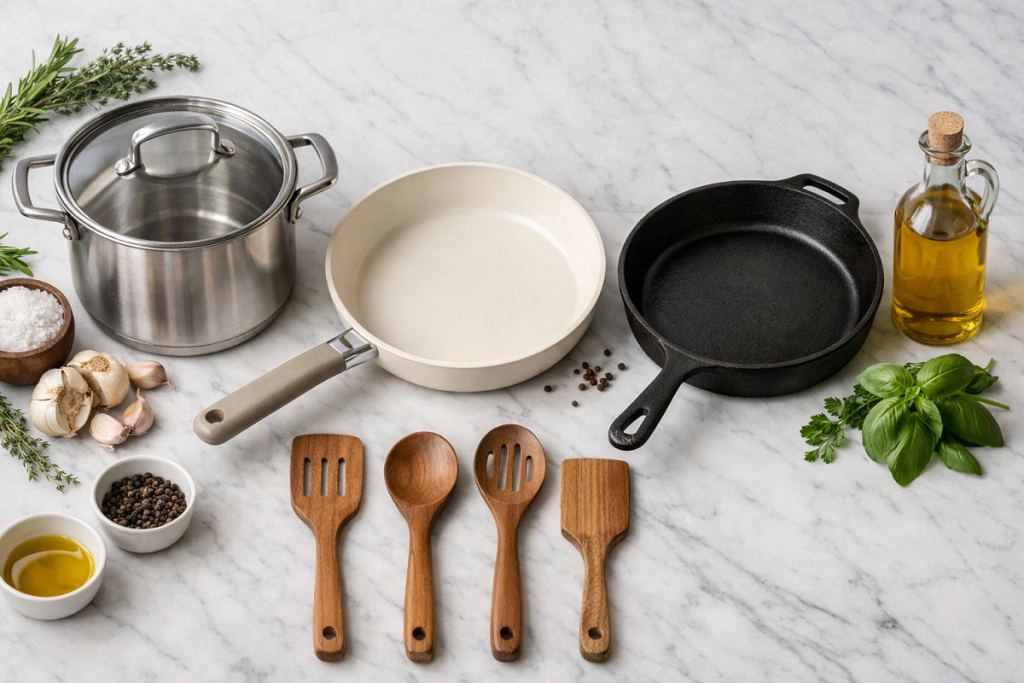
- Wooden spatulas
- Silicone spoons
- Nylon tools
These are softer and less likely to damage the coating.
Cook on low or medium heat
Non-stick pans are not made for very high heat cooking. Use low or medium heat for daily cooking.
Avoid heating an empty pan for a long time. Add food, oil, or butter before the pan becomes too hot.
Wash gently
Do not use steel wool or rough scrubbers. Wash with a soft sponge and mild dish soap.
Let the pan cool before washing. Sudden temperature changes can damage the surface.
Store carefully
If you stack pans, place a soft cloth or pan protector between them. This prevents scratches from other cookware.
Safer Alternatives to Non-Stick Cookware
If your non-stick pan is badly scratched, you may want to switch to other cookware types.
Stainless steel
Stainless steel cookware is strong, durable, and good for daily cooking. It does not have a non-stick coating, so it will not peel. However, you need to learn proper heat control to prevent food from sticking.
Cast iron
Cast iron is very durable and can last for many years. It becomes more naturally non-stick when seasoned properly. It is great for frying, searing, and traditional cooking.
Carbon steel
Carbon steel is lighter than cast iron but works in a similar way. It also needs seasoning and care.
Ceramic cookware
Ceramic-coated pans are often marketed as a safer non-stick option. But they can also wear out over time. If the coating gets damaged, they should be replaced too.
Glass cookware
Glass bakeware is good for baking and oven use. It does not have a non-stick coating and is easy to clean.
Should You Repair a Scratched Non-Stick Pan?
In most cases, you should not try to repair a scratched non-stick pan at home.
Some products claim to restore non-stick coating, but they may not be safe or long-lasting. A damaged cooking surface is usually better replaced than repaired.
If the pan is expensive and still under warranty, contact the manufacturer. Otherwise, replacement is the practical option.
Final Verdict: Is Scratched Non-Stick Cookware Safe?
A small light scratch may not be an emergency. But deep scratches, peeling coating, flakes, rough surface, or food sticking badly are clear signs that the pan should be replaced.
For safer cooking, use non-stick cookware carefully. Avoid metal utensils, high heat, rough cleaning, and poor storage.
If your pan is already badly scratched, do not take unnecessary risk. Replace it with a new non-stick pan or choose a safer alternative like stainless steel, cast iron, carbon steel, ceramic, or glass cookware.
Frequently Asked Questions
If the scratch is very light and the coating is not peeling, one-time use may not be a major issue. But if the coating is flaking or coming off, avoid using it.
Ceramic cookware can be a good option, but it also needs care. If the ceramic coating scratches or peels, it should be replaced too.
Throw it away when the coating is deeply scratched, peeling, flaking, rough, or no longer non-stick.
Yes. Metal utensils are one of the most common reasons non-stick pans get scratched. Use wooden, silicone, or nylon utensils instead.
For long-term use, stainless steel and cast iron are popular choices. Stainless steel is durable and easy to maintain, while cast iron can last for decades with proper care.